
A New Season of Courage: Going to School in Liberia

This fall we have written about a new season of hope, and a new season of learning. This one is about courage.
Courage is not the absence of fear. It is what you do while you are still afraid.
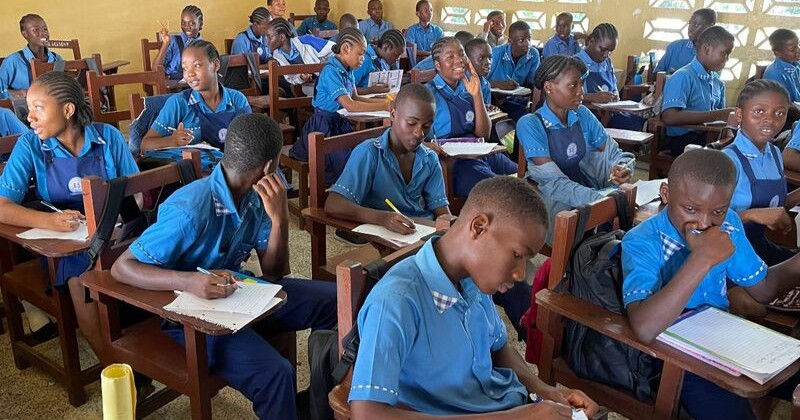
Going to school in Liberia asks more of a student than most of us have ever had to give. For Rachel, Henry, and Mark, it looks like a long walk down a flooded road, a full day of school on an empty stomach, and sitting down in a ninth grade classroom at age 20 to finish what war and poverty interrupted.
In Liberia, a student's grade level reflects what a family has been able to afford, not what the student can do. Years of war, the Ebola epidemic, and unpaid fees pull children out of school and return them older than their classmates.

Rachel, age 16, is an 8th grader at Shalom Christian School, and she is thrilled to be back this year. Learning and being with friends brings her joy, even as she worries daily about her mother's fragile health.
Rachel's courage shows up in what she does for everyone else.
Rachel has taken it on herself to keep her school clean. She organizes classmates and friends to clear trash and debris from the grounds where they learn and play, in a city where that work is never finished. She envisions a brighter and cleaner future, and she is already building it.
One of five siblings, Rachel lives with her single mother on Peace Island, a 30 minute walk from school. When her mother is unwell, more of the household duties fall to Rachel.

After school, Rachel helps her mother sell dry and raw fish. It is the family's only income, and it often takes the hours she would otherwise spend studying.

FISHMONGERS: In Liberia, fishmongers are almost entirely women, and they make up more than half the country's fisheries workforce. The Liberia Artisanal Fisheries Association counts roughly 20,000 women among about 33,000 people working in the artisanal sector. The work runs around the clock. Women rise as early as 2 a.m. to buy the best catch, then tend wood-fired ovens through the night so the fish will not spoil. Prolonged exposure to that smoke brings eye damage and respiratory illness.
Right now, your gift is doubled.
We have $15,000 left in matching funds. Give today and your donation will be doubled.

Henry, age 20, is a 9th grader at Christ Arena Christian School. He is excited to work hard to improve his spelling and reading skills along with math and history. A new school policy, requiring students to advance only after reaching 80% on their exams, makes Henry nervous but also motivated.
At 20, Henry is finishing what he started.
He could have given up on school years ago. Instead, he is back in class and determined to advance. Henry has three siblings who live upcountry with his mother in Kataa, Margibi County. He lives in Congo Town with his father and stepmother, and works long hours at home every day after school. Like many Liberians, he often goes to school on an empty stomach, with no guarantee of more than one meal a day. Despite all of it, Henry is grateful for the sponsorship of his education, and excited to advance and learn alongside his friends.

FAMILY UNITS: The expression, “It takes a village” is more than a catch phrase in Liberia, where households include not just parents and children but also grandparents, aunts, uncles, cousins, and nieces or nephews. Fewer than half of children under 18 live with both parents. Many live with a single parent, a grandparent, or another relative who has taken them in.


Mark, age 15, is going into the 7th grade at Christ Arena Christian School. During this time of year, he is excited and a little afraid.
He can't wait to be with friends but is missing the two friends who weren’t able to advance to the next grade with him. Still, he is determined, especially when it comes to memorizing spelling words so he can help his class win the school spelling contest.
Mark gets up before dawn so he will not be late.
The road between home and school floods in the rainy season, and the walk that takes half an hour on a dry day can take much longer. Mark is up early to be sure he makes it on time. He also carries a quieter worry: that his mother, raising him alone, will not be able to afford a new pair of shoes this year.
Liberians rely on used clothing markets to procure shoes and clothing. Rain, mud, flooding, and traffic can turn a short walk to school into a long one.
BEND-DOWN: Most clothing and footwear in Liberia arrives secondhand, in plastic-wrapped bales shipped from abroad. When a bale is cut open, the best items sell first and at the highest prices. What is left is worn, mismatched, or flawed, and it goes onto tarps at deep discounts. Buyers call it "bend-down," because that is what it takes to sort through the pile.
Rachel, Henry, and Mark cannot attend school without sponsorship.
All the courage in the world will not cover registration fees, a uniform, shoes, or supplies. Their courage does something else. It gets them through each day, and it lets them learn and thrive.
As of late September, we are 54% of the way to our $120,000 goal for the year. The next $15,000 we raise will be matched dollar for dollar, which is 40 more students at a desk.
$750 sponsors a student for the full year. $375 covers half. $63 a month covers one student across the year. Any amount you can give helps.
For other ways to donate, visit: www.keyarasgift.org/donate
Warmly,
The Keyara's Gift Team
P.S. Only $15,000 of our $47,000 matching pledge is left. Once it is gone, it is gone. Your gift today counts twice.

Comments